
逆水寒
China activates Level IV emergency response for typhoon, heavy rain as three typhoons simultaneously present at sea near China’s coastal areas_我的网站

A |
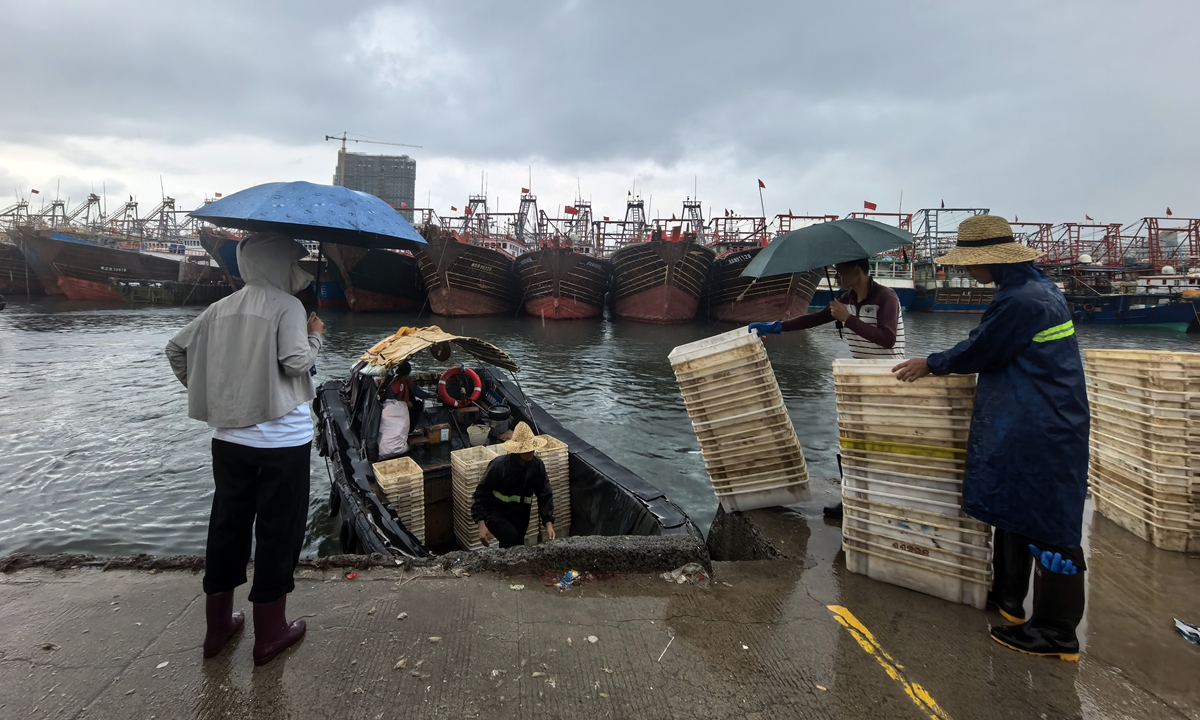
China Meteorological Administration (CMA) issued a Level IV emergency response for typhoon and heavy rain on Saturday, when typhoons including Gaenari, Narra, and Saudel created a rare situation in which three typhoons were active simultaneously over the South China Sea and the Northwest Pacific.
As Typhoon Gaenari, the 20th typhoon of this year, formed on Saturday afternoon, a total of 20 typhoons have formed since January this year, well above the historical average of 13.4 typhoons form from January to August, despite August is not yet over. Statistics also show that typhoons have formed every month from January through August this year, with the number of typhoons generated each month exceeding the average for the same period in previous years, Beijing Daily reported.
Typhoon Gaenari was about 320 kilometers east-northeast of Taipei on China’s Taiwan, as of 2 pm on Saturday, packing maximum winds of 18 meters per second near its center.
Typhoon Gaenari is expected to move rapidly northwestward at a speed of 35 to 40 kilometers per hour, with little change in intensity, China Central Television reported on Saturday.
While the combined influence of Typhoon Narra, the 19th typhoon of this year,and the southwest monsoon is set to bring heavy rain to parts of South China and coastal areas of East China’s Zhejiang and Fujian provinces over the next three days, Typhoon Saudel, this year’s 18th typhoon, is forecast to move northwest and strengthen.
China’s National Meteorological Center maintained a blue typhoon warning on Saturday morning, with Typhoon Narra centered over the Beibu Gulf, about 30 kilometers south of Dongxing city, South China’s Guangxi, China Central Television (CCTV) reported.
Typhoon Narra is forecast to linger over the Beibu Gulf from Saturday afternoon to Sunday night, strengthening to a severe tropical storm before slowly moving northeastward and northward from Monday. It is expected to weaken as it approaches the Leizhou Peninsula in Guangdong and coastal areas of southern Guangxi.
Typhoon Narra and the southwest monsoon are expected to bring heavy to torrential rain to Hainan, southern Guangxi and coastal Guangdong over the next three days, with some areas facing extreme rainfall.
China’s National Flood Control and Drought Relief Headquarters and the Ministry of Emergency Management activated a Level IV emergency response for flood and typhoon control in Hainan, Guangxi and Guangdong at 8 pm on Friday.
Meteorological experts warned that Typhoon Narra will follow a complex track and linger over the Beibu Gulf, urging heightened precautions for maritime activities, transportation and coastal tourism. Heavy rain could trigger mudslides, landslides and flooding, while localized severe weather may also cause secondary disasters, chinanews.com reported.
In addition, Sun Qianqian, a meteorological analyst with the CMA, said that sea surface temperatures along Typhoon Saudel’s path are relatively high, and the storm is expected to intensify rapidly in the coming days, potentially reaching super typhoon strength. Around Wednesday, it is expected to pass through the Ryukyu Islands and move into the East China Sea, after which its track remains somewhat uncertain.
According to Sun, an active South China Sea monsoon and multiple interacting tropical systems are expected to bring heavy rain to coastal areas from southern to eastern China through Monday. Southern Guangxi, Hainan, southern Taiwan Island, eastern Guangdong, southern Fujian and southern Shandong are likely to see the heavy rainfall, with risks of rain-related secondary disasters, CCTV reported.
Global Times
。 杭州近日发布《杭州市城镇老旧小区体检指南(试行)》(以下简称《指南》)。这是浙江省首份针对老旧小区的专项体检指南,标志着杭州老旧小区体检进入“先体检、后更新”时代。

B | 房子和人一样,也会“上年纪”“生毛病”。

C | 结构安不安全、管网老没老化、消防通道畅不畅通……这些问题该怎么查?根据住房城乡建设部要求,房龄25年以上的老旧住宅小区,须每5年做一次房屋体检,城市更新中也要坚持“先体检后更新、无体检不更新”的原则。杭州这一《指南》明确,适用于建成20年及以上、设施配套不足、人居环境较差、管理机制薄弱的杭州市行政区域内城镇建成区住宅小区。老房子要体检哪些项目呢?《指南》划分了“建筑本体、基础设施、环境秩序、长效运维”四大维度,细化为21个一级检查项目、67个二级核查内容,涵盖房屋结构安全、外立面状况、水电管网铺设、电梯运行安全、公共空间配套、物业服务管理等,与居住安全和生活品质息息相关的项目。具体看,在建筑本体方面,重点排查建筑结构安全、外墙渗漏与高空坠物隐患、电梯运行安全等核心风险;基础设施方面,聚焦管网老化、消防通道堵塞、飞线充电等突出安全隐患;环境秩序方面,统筹推进绿化景观、公共活动空间、停车配套等方面的整体提质;长效运维方面,覆盖物业管理、维修资金、居民自治、社区共建共治等内容,旨在夯实改造后长效管理基础。值得关注的是,《指南》将危及安全的指标明确列为“风险项”,作为改造优先处置内容,同时将居民改造需求划分为“一般”与“紧急”两类,作为改造项目排序、资金倾斜的重要依据。“为老旧小区建立常态化的体检机制,真实摸清群众需求,这是今后城市更新的必走之路。目前全国层面的老旧小区体检指南尚未发布,杭州实践将为全国性的老旧小区体检指南贡献地方智慧。”浙江省建筑科学设计研究院城市更新首席专家王贵美对这份《指南》表示肯定。
Current article:http://ax21n.shangfochengcongshuaizhuang.buzz/news/20260826_895630.html
Published on:05:11:03
相关新闻
- “超级地球”或六光年以外的生命
- 外交部:中国与柬、泰都是友好邻邦,都开展正常军备合作
- China turns ancient TCM wisdom into high-tech personalized skincare
- 京东618,到底是在当天购买最便宜,还是5月31号晚上8点便宜?
- 智能体手机热闹登场WAIC,最难的一关还在底层
- 韩红爱心慈善基金会发布关于救护车项目签约主体的情况说明:从未违规采购任何医疗器械,所有采购环节杜绝任何形式的腐败与利益输送
- US watchdog says Taliban benefiting from international aid through 'fraudulent' NGOs
- 多彩活动,“老”有意思了!
- 辽宁省旅游接待规模位列全国前十
- 英国推出的小米混合3:6128GB,价格4334元
最后更新
- 2026精选:河北省售检票系统服务商怎么选?实力解析与推荐
- 2025淘宝京东618确定6月20日结束,最便宜时间在6月17日晚8点到6月18日全天
- 小米官宣澎程 N90 全尺寸 SUV 转弯半径 5.95m,官方一镜到底实测视频公布
- 美方公布对伊经济制裁细则,威胁将为伊朗洗钱的实体移出美元体系;伊朗公开穆杰塔巴一段视频;内塔尼亚胡称伊朗曾企图暗杀其子
- 泉城福彩“父子兵”:薪火相传,新力逐光
- 韩国KOSPI指数涨超1% 三星电子涨超2%
- योगी सरकार का बड़ा फैसला- स्टांप शुल्क में छूट की घोषणा, रेंट एग्रीमेंट पर शुल्क में भी राहत, इनकाे मिलेगा फायदा
- 自查!河南新乡红旗区公布两名密接者活动轨迹
- iPhone 14 Pro Max预售销量超同期,将推动苹果股价大涨_iPhone14ProMax成预售冠军_系列
- 名记:我预计库里和勇士会在训练营之前提前续约